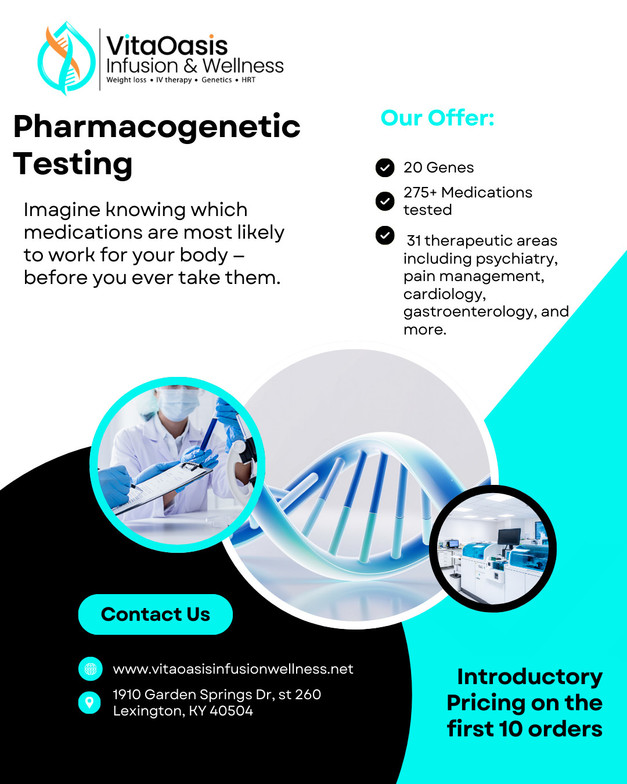
Have you ever wondered why a medication worked wonders for someone else—but caused side effects, didn’t work at all, or made you feel worse? The answer may not be the medication itself, but how your body processes it. This is where pharmacogenomic testing comes in.
Pharmacogenomic testing (PGx testing) is transforming healthcare by allowing providers to tailor medications based on an individual’s genetic makeup. Instead of trial-and-error prescribing, this testing helps guide safer, more effective treatment decisions—especially for medications related to mental health, pain management, cardiovascular disease, hormones, and more.
We’re excited to launch pharmacogenomic testing as part of our personalized, root-cause approach to healthcare.
What Is Pharmacogenomic Testing?
Pharmacogenomic testing analyzes specific genes that influence how your body absorbs, metabolizes, and responds to medications. These genes affect liver enzymes, drug transporters, and receptors—key factors that determine whether a medication will be effective or cause side effects.
Rather than guessing which medication or dose might work best, pharmacogenomic testing provides insight into:
-
Which medications are more likely to be effective
-
Which medications may cause side effects
-
Whether standard dosing may be too high or too low
-
How quickly or slowly your body metabolizes certain drugs
This allows healthcare providers to make data-driven medication decisions, improving outcomes and reducing unnecessary medication changes.
Why Pharmacogenomic Testing Matters
Traditional prescribing often follows a “one-size-fits-all” model. Unfortunately, that approach doesn’t account for genetic differences that significantly impact medication response.
Pharmacogenomic testing can help:
-
Reduce medication side effects
-
Improve treatment effectiveness
-
Decrease trial-and-error prescribing
-
Support safer long-term medication use
-
Improve medication adherence and confidence
For many patients, this testing can be life-changing—especially those who have struggled with medications in the past.
Medications Commonly Covered by Pharmacogenomic Testing
Our pharmacogenomic test evaluates over 200 medications, making it a more comprehensive and affordable option compared to many traditional testing services.
Common medication categories include:
-
Antidepressants and anti-anxiety medications
-
ADHD and stimulant medications
-
Pain medications and opioids
-
Cardiovascular medications
-
Hormone-related medications
-
Sleep medications
-
Gastrointestinal medications
This makes pharmacogenomic testing valuable for individuals managing mental health conditions, chronic illness, hormone imbalances, or complex medication regimens.
Who Should Consider Pharmacogenomic Testing?
Pharmacogenomic testing isn’t just for people who’ve had bad reactions—it’s for anyone who wants a more personalized, proactive approach to medication management.
You may benefit from pharmacogenomic testing if you:
-
Have experienced medication side effects
-
Feel like medications “never work” for you
-
Have tried multiple medications without success
-
Are starting a new long-term medication
-
Take multiple prescriptions
-
Want a more personalized healthcare approach
Even individuals who feel “stable” on medications can benefit from understanding whether their current regimen is truly optimized for their genetics.
How Pharmacogenomic Testing Works
The testing process is simple and non-invasive:
-
A cheek swab or saliva sample is collected
-
The sample is sent to a certified laboratory
-
Your results identify genetic variations that impact medication metabolism
-
A licensed medical provider reviews and interprets your results
-
Medication recommendations are tailored to your genetic profile
This information helps guide safer medication choices—not only now, but for future prescriptions as well.
Pharmacogenomics vs. Trial-and-Error Prescribing
One of the biggest advantages of pharmacogenomic testing is reducing the frustrating cycle of medication trial and error.
Without genetic data, patients may spend months or even years:
-
Switching medications
-
Adjusting doses
-
Managing side effects
-
Feeling discouraged or unheard
Pharmacogenomic testing shifts care toward precision medicine, allowing providers to make informed decisions earlier in the treatment process.
How This Fits Into Personalized & Functional Healthcare
Pharmacogenomic testing works best when combined with a holistic, personalized healthcare approach. Genetics are one piece of the puzzle—alongside labs, lifestyle, nutrition, hormone balance, and overall health history.
By integrating pharmacogenomics into care plans, providers can:
-
Optimize medication effectiveness
-
Reduce unnecessary prescriptions
-
Align medications with a patient’s overall wellness goals
-
Support long-term health, not just symptom management
This approach empowers patients to take an active role in their healthcare decisions.
Why Choose Our Pharmacogenomic Testing?
We are proud to offer pharmacogenomic testing at a lower price point than GeneSight, while covering over 200 medications. Our testing is paired with provider interpretation—not just raw data—so results are actionable and easy to understand.
What sets our service apart:
-
Affordable pricing
-
Broad medication coverage
-
Provider-led interpretation
-
Personalized recommendations
-
Integrated into your overall wellness plan
This isn’t just a test—it’s a tool for better healthcare decisions.
Ready to Personalize Your Medications?
If you’re tired of guessing, struggling with side effects, or simply want a smarter approach to medication management, pharmacogenomic testing may be the missing piece.
Book your pharmacogenomic testing consultation today and take the next step toward personalized, genetics-based care.
Schedule your appointment now
Learn how your genetics influence your medications
Stop the trial-and-error approach—start personalized medicine
Krystle Maynard
Contact Me

.jpg)
